Famous Landmark Vocabulary for Kids
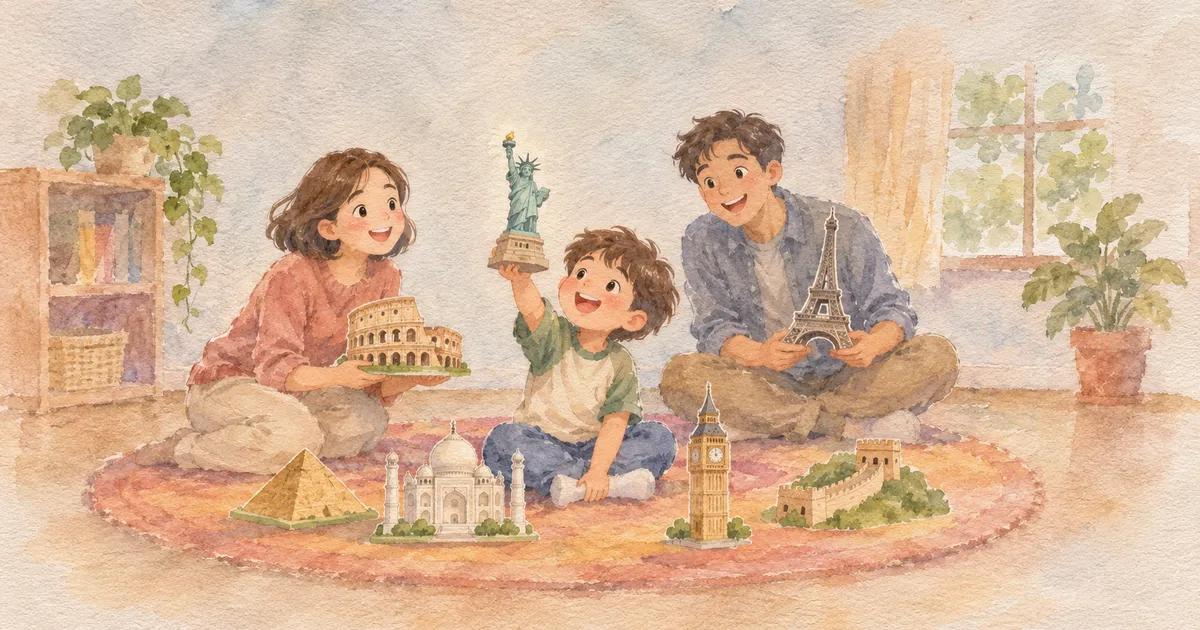
Famous Landmark Vocabulary for Kids: Words and Activities gives families place words, sentence frames, and home-learning games. Children name towers, bridges, temples, and pyramids, then describe their location and appearance. Begin with a small word group and worldwide photographs. A five-year-old might say, “It is a tall tower.” An older child can add, “The tower was built from iron.” The goal is confident speech, not memorising a long list.
📥 Famous Landmark Vocabulary for Kids
Learn, use, and remember useful words for describing famous places around the world.
Leave your email — we'll send the PDF to your inbox.No spam — the PDF plus one short reminder. Unsubscribe anytime.
Core Words and Phrases
Teach concrete nouns before descriptions. Photographs explain words such as bridge, dome, and statue. Children can point, repeat, sort, and match before building sentences.
Use Famous Landmark Vocabulary for Kids: Words and Activities as a flexible vocabulary set. Younger learners can choose six table words. Older children can study the full set and discuss materials, history, or location.
Using Landmark Words in Context
Move from naming to describing with one frame: “The ___ is a ___ in ___.” A child can say, “The Taj Mahal is a monument in India,” or, “The Great Wall is a landmark in China.” Add one detail after the basic sentence becomes secure.
When practising Famous Landmark Vocabulary for Kids: Words and Activities, ask questions with visible answers: “Is it ancient or modern?”, “What is it made of?”, and “Can you see a tower, dome, arch, or column?” Photographs help children answer without guessing.
Across LearnLink lessons, our tutors adapt the language frame to each child’s level. A beginner may point and say, “bridge.” A confident learner might say, “This stone bridge crosses a river and connects two parts of the city.”
Quick teaching tip
Keep the photograph visible while your child speaks. Remove it later and request three remembered details for recall practice.
Activities for Different Ages
Children benefit from movement, pictures, and short turns. Place landmark pictures around the room, say a word, and have your child walk to its image. Swap roles so your child gives the instruction.
Children aged 8–10 can compare landmarks by height, shape, age, or material. Older learners can research one landmark and present a short spoken guide. They should separate confirmed facts from opinions such as “It looks mysterious.”
The age bands are guides, not fixed levels. A multilingual child may understand complex ideas but need a short English frame. Keep the thinking challenging while limiting new language.
Mystery Landmark Challenge
Hide a chosen picture. Give three clues: “It is ancient. It is made of stone. It has sloping triangular sides.” Your child guesses “a pyramid at Giza,” then selects an image and gives three clues.
Practice That Builds Lasting Recall
A short routine turns Famous Landmark Vocabulary for Kids: Words and Activities into active language. Review several cards, hide them, and ask which one disappeared. Later, mix older cards with two new ones.
Give each word a purpose. Your child can plan an imaginary world trip, label a map, design a landmark, or record a 30-second audio guide. Require one noun, one describing word, and one location phrase per response.
Weekly landmark practice checklist
- Choose five or six target words.
- Match each word to a clear photograph.
- Say one model sentence aloud.
- Ask your child to retrieve the words without looking.
- Use two words in a new speaking task.
- Review older words before adding more.
Common Mistakes and How to Correct Them
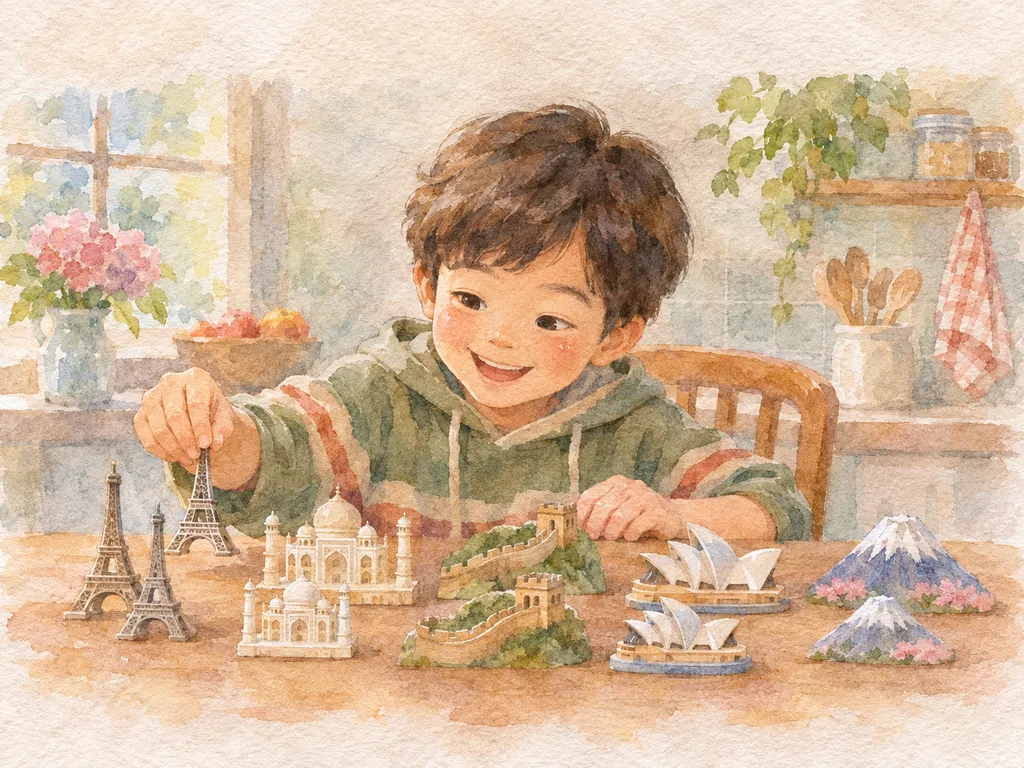
Children may call every landmark a building. Explain that landmarks include buildings, structures, objects, and natural features. Mount Fuji is a natural landmark; the Sydney Opera House is a building. Ask, “What type of landmark is it?”
Articles and capital letters need attention. English usually says “the Eiffel Tower,” “the Taj Mahal,” and “the Great Wall of China,” but “Machu Picchu” and “Angkor Wat” do not normally take the. Teach each name as one spoken chunk.
Landmark learning: myth and fact
Myth: Children must memorise every landmark name before speaking.
Fact: They can speak in the first lesson with frames such as “It is a tower” and “It is in France.”
Myth: Translation should never be used.
Fact: A quick translation confirms meaning, while picture questions prompt the new English word.
- Choose four landmark picture cards and say each word before matching labels.
- Contrast monument and landmark using two familiar examples from the article.
- Ask your child to correct three mislabeled landmarks aloud using full sentences.
- Revisit one confusing word and draw a simple clue beside it.
- Finish with a five-card sorting game: landmark, city, country, or feature.
When a word has several meanings or pronunciations, Cambridge Dictionary is a useful check before turning it into child-friendly examples.
Frequently Asked Questions
What Counts as a Famous Landmark for Children?
A landmark is a recognisable place or feature linked with a location. It may be human-made, such as a bridge, palace, statue, or temple, or natural, such as a mountain or waterfall. Choose examples from several regions and cultures. Children can learn the naming and describing words without detailed historical knowledge.
How Many Landmark Words Should My Child Learn at Once?
Start with five or six words for a young beginner. Add more after your child recognises the pictures and recalls some words independently. Famous Landmark Vocabulary for Kids: Words and Activities works as a reusable set, not a one-day list. Older learners can handle larger groups sorted by structure, material, location, or age.
Should a Multilingual Child Translate the Landmark Words?
A brief translation can connect a new English word with a known idea. Then return to English through a picture, gesture, choice question, or sentence frame. Avoid translating every task. Your child should retrieve the English word directly from an image, map, or landmark detail.
How Can We Practise Correct Pronunciation at Home?
Use an audio model from a trusted dictionary, then divide long names into manageable parts. Follow three steps: listen once, repeat twice, and use the full name in one sentence. Prioritise understandable speech over copying one national accent. Record two attempts a week apart to compare sounds, stress, and phrasing.
If your child needs steady speaking practice, start small — choose a trial lesson.
Stay updated on our latest tips and resources by following us on Instagram LearnLink.